DELAWARE COUNTY – May 18, 2026 – For years, Pennsylvania’s school-funding system left districts like William Penn School District trying to do more with less: larger class sizes, aging buildings, and fewer supports than wealthier communities could offer.
In 2014, families and education advocates said enough, launching William Penn School District v. Pennsylvania Department of Education to challenge the state’s inequitable funding model. After nearly a decade of testimony and evidence, the Commonwealth Court ruled in 2023 that the system was unconstitutional.
That ruling demanded action. In the legislature, my colleagues and I began directing major new investments to the districts that had been underfunded the longest — commitments Governor Shapiro signed into law in 2024 and again in 2025.
The 2025–26 budget delivered more than $900 million in new pre-K–12 funding, including $565 million in adequacy funding, which provides targeted support to districts that need additional resources to reach the basic level of opportunity the court says every student is entitled to.
For districts like William Penn, these increases mean the ability to hire more teachers, expand academic supports, update facilities, and stabilize programs that had been stretched thin for years.
The proposed 2026–27 budget continues that work, with additional increases to Basic Education Funding, Special Education, and more than $526 million in new adequacy investments — dollars designed to help close long-standing gaps and give districts like William Penn the resources they need to support students.
A District on the Rise
The William Penn School District’s recent recognition as a national “District on the Rise” in the Education Recovery Scorecard shows what can happen when long-underfunded schools finally receive the resources they need.
- William Penn students have made some of the strongest academic gains in the country, ranking in the 88th percentile nationally for student learning growth.
- The district posted math gains equivalent to nearly a half-year of additional learning, outpacing many demographically similar districts nationwide.
- William Penn also posted strong reading growth, narrowing gaps that had persisted for years and outpacing many similar districts nationwide.
But the central achievement itself belongs to the people inside the district.
Leadership, Hard Work, and Resources Come Together
Success in public education isn’t automatic — and it isn’t achieved by funding alone. It takes clear leadership, dedicated staff, shared goals, and people willing to put in the daily work to help students succeed. Resources open the door, but it’s the ideas, discipline, and commitment inside a district that turn those resources into real results.
WPSD Superintendent Dr. Eric Becoats, the WPSD School Board, administrators, teachers, staff, families, and students have done exactly that. Their focus and determination are what transformed new investments into stronger instruction, better supports, and measurable gains for children.
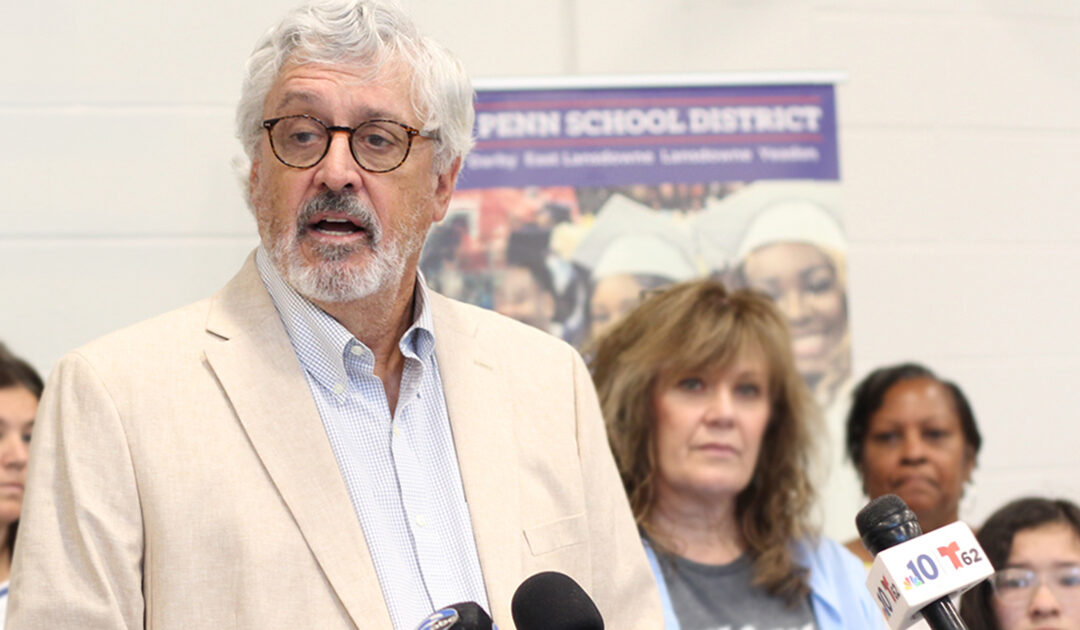
To celebrate that success, I joined House Speaker Joanna McClinton, State Rep. Gina Curry, State Rep. Anthony Hardy Williams, along with Dr. Becoats, administrators, school board members, teachers, and staff at a press conference in William Penn this week.
William Penn’s progress reflects what strong leadership and dedicated educators can accomplish — and what becomes possible when the state finally provides adequate, equitable funding.
Budgeting With Purpose and Courage
Real progress requires intentional, thoughtful budgeting — the kind that aligns resources with the real needs of students and the educators who serve them. Strong leadership in our schools can only go so far if the state doesn’t match that effort with appropriate, equitable investments.
And the challenges aren’t limited to underfunded schools. For too long, Pennsylvania’s entire approach to the education budget has been reactive and inconsistent —adding new responsibilities without planning for the resources required to carry them out. For generations, the General Assembly has passed new unfunded mandates onto school districts without providing the dollars to implement them—a pattern that would earn a failing grade in any basic economics class.
Moving forward, we need the same courage and clarity in Harrisburg that we see in our classrooms: responsible, equitable budgeting that supports the work our educators are already doing.
This is the path forward for Pennsylvania: a funding system that is fair, functional, and grounded in what students actually need to succeed. Not simply spending more, but budgeting with purpose and a clear understanding of the resources required for every district to thrive — and empowering the innovation, leadership, and all-stakeholder collaboration that makes real progress possible.